
Men’s Rugby World Cup 2027 Venues, Locations, Stadiums, Host Cities across Australia.
Sydney | Wangal & Gadigal to use two stadiums with Stadium Australia and Sydney Football Stadium.
Stadium capacities range from 25,000 up to 82,000.
Key selection factors included stadium facilities, fan accessibility and venue availability.
Tickets go on sale from 18 February during the first Presale open to registered fans.
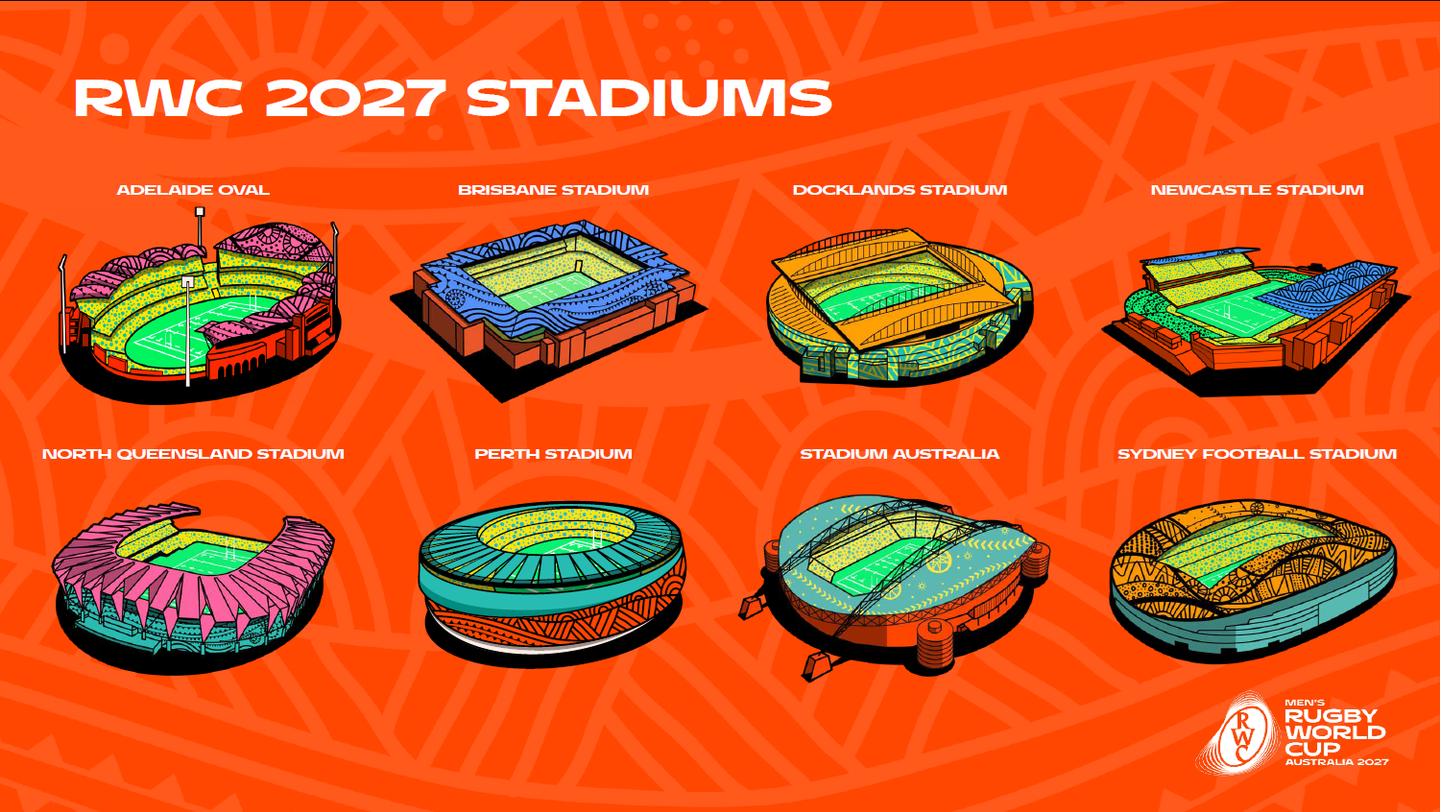
Rugby World Cup 2027 host cities and match allocations:
Men’s Rugby World Cup 2027 Host Cities, Stadiums, Locations and Venues
Adelaide | Tarntanya
Adelaide Oval – Located on the riverside and known for its stunning blend of heritage and modern design, it hosted matches in Rugby World Cup 2003, including Australia’s victory over Namibia.
Capacity: 53,000
Matches: Six pool matches
Brisbane | Meeanjin
Brisbane Stadium – Known as “The Cauldron”, it is one of Australia’s most iconic rugby venues offering an electric atmosphere with fans close to the action. The stadium hosted nine Rugby World Cup matches in 2003 and featured 13 of the 2027 qualified teams.
Capacity: 52,500
Matches: Six pool matches, two round of 16 and two quarter-finals
Melbourne | Narrm
Docklands Stadium – The only fully enclosed venue in the tournament. The roof will remain closed for all matches, ensuring perfect conditions for players and fans. Hosted seven RWC matches in 2003.
Capacity: 53,000
Matches: Six pool matches and two round of 16
Newcastle | Awabakal-Worimi
Newcastle Stadium – Set to host Rugby World Cup matches for the first time in 2027. The venue’s rugby heritage includes the British & Irish Lions’ 1989 match against NSW Country and the Wallabies’ 2012 Test against Scotland.
Capacity: 30,000
Matches: Four pool matches
Perth | Boorloo
Perth Stadium – Opened in 2018 by the Swan River, the multi-award-winning venue is recognised globally for its design and fan experience. A regular host to Wallabies Test matches, the stadium will host the RWC 2027 opening match on 1 October 2027.
Capacity: 60,000
Matches: Five pool matches (including the opening) and two round of 16
Sydney | Wangal & Gadigal
Stadium Australia – The biggest stadium used across the tournament, it joins iconic venues Eden Park, Twickenham and Stade de France as the only stadiums in history to host a Men’s Rugby World Cup Final for a second time.
Capacity: 82,000
Matches: Two pool matches, two quarter-finals, two semi-finals, Bronze Final and Final
Sydney Football Stadium
Reopened in 2022 after a complete rebuild, the most modern stadium of RWC 2027 located in the heart of Sydney will offer fans an electric atmosphere and cutting-edge facilities.
Capacity: 42,500
Matches: Three pool matches and two round of 16
Townsville | Gurambilbarra
North Queensland Stadium – Opened in 2020 and making its Rugby World Cup debut, the stadium’s striking roof design is inspired by the tropical pandanus plant, native to the North Queensland region.
Capacity: 25,000
Matches: Four pool matches
Stadiums have been selected in consultation with Host Governments for their facilities and availability, as well as ensuring a maximum reach of the tournament footprint for local and international rugby fans.

0 Comments