
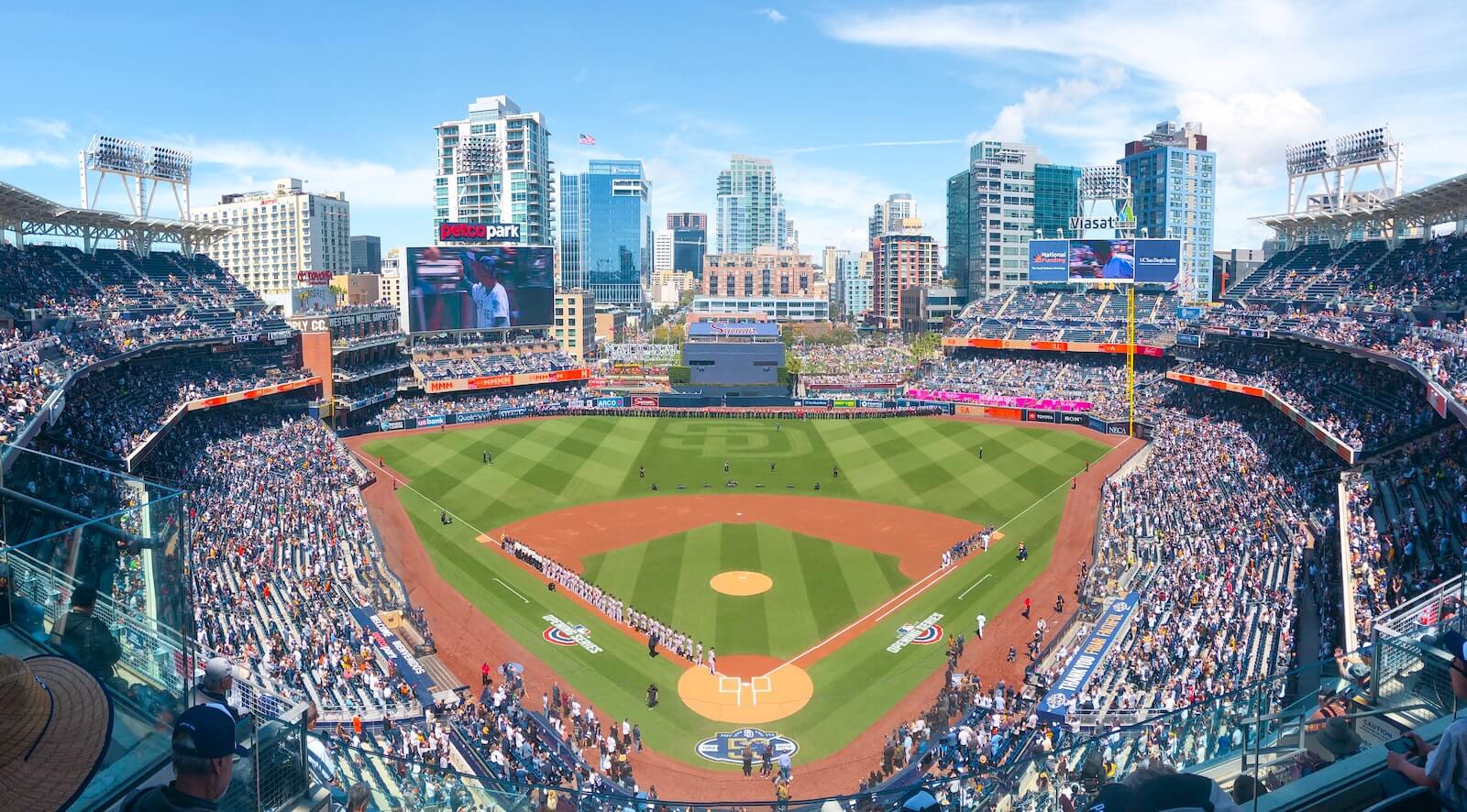
MLB stadiums with their capacity: MLB (Major League Baseball) teams play in 30 stadiums. The Boston Red Sox’s Fenway Park, originally inaugurated in 1912, is the oldest baseball stadium.
The Texas Rangers’ Globe Life Field, which opens in 2020 and is located in Arlington, Texas, is the newest stadium.
In the decade of the 1910s. There were two ballparks constructed. Followed by three in the 1960s. One in each of the 1970s and 1980s, seven in the 1990s, twelve in the 2000s, three in the 2010s, and one in the 2020s.
Five baseball stadiums have artificial turf, while 25 have natural grass fields.
Angel Stadium, Dodger Stadium, Fenway Park, Kauffman Stadium, Nationals Park, Oakland Coliseum, Oriole Park at Camden Yards, Wrigley Field, Yankee Stadium, and nine other stadiums lack corporate naming rights agreements.
Rankings the 30 MLB Stadiums/ballparks in Alphabetic order
Team Name — Arena Name Arena Location — Seating Capacity — Opening Year
Arizona Diamondbacks — Chase Field Phoenix, Arizona — 48,686 — 1998
Atlanta Braves — Truist Park Cumberland, Georgia — 41,084 — 2017
Baltimore Orioles — Oriole Park at Camden Yards Baltimore, Maryland — 45,971 — 1992
Boston Red Sox — Fenway Park Boston, Massachusetts — 37,755 — 1912
Chicago Cubs — Wrigley Field Chicago, Illinois — 41,649 — 1914
Chicago White Sox — Guaranteed Rate Field Chicago, Illinois — 40,615 — 1991
Cincinnati Reds — Great American Ball Park Cincinnati, Ohio — 42,319 — 2003
Cleveland Guardians — Progressive Field Cleveland, Ohio — 34,788 — 1994
Colorado Rockies — Coors Field Denver, Colorado — 50,144 — 1995
Detroit Tigers — Comerica Park Detroit, Michigan — 41,083 — 2000
Houston Astros — Minute Maid Park Houston, Texas — 41,168 — 2000
Kansas City Royals — Kauffman Stadium Kansas City, Missouri — 37,903 — 1973
Los Angeles Angels — Angel Stadium Los Angeles, California — 45,517 — 1966
Los Angeles Dodgers — Dodger Stadium Los Angeles, California — 56,000 — 1962
Miami Marlins — Marlins Park Miami, Florida — 37,442 — 2012
Milwaukee Brewers — Miller Park Milwaukee, Wisconsin — 41,900 — 2001
Minnesota Twins — Target Field Minneapolis, Minnesota — 38,544 — 2010
New York Mets — Citi Field Queens, New York — 41,922 — 2009
New York Yankees — Yankee Stadium Bronx, New York — 46,539 — 2009
Oakland Athletics — RingCentral Coliseum Oakland, California — 56,782 — 1966
Philadelphia Phillies — Citizens Bank Park Philadelphia, Pennsylvania — 42,792 —
2004
Pittsburgh Pirates — PNC Park Pittsburgh, Pennsylvania — 38,747 — 2001
Pittsburgh Pirates — PNC Park Pittsburgh, Pennsylvania — 38,747 — 2001
San Diego Padres — Petco Park San Diego, California — 40,209 — 2004
San Francisco Giants — Oracle Park San Francisco, California — 41,915 — 2000
Seattle Mariners — T-Mobile Park Seattle, Washington — 47,929 — 1999
St. Louis Cardinals — Busch Stadium St. Louis, Missouri — 45,494 — 2006
Tampa Bay Rays — Tropicana Field St. Petersburg, Florida — 42730 — 1990
Texas Rangers — Globe Life Field Arlington, Texas — 40,300 — 2020
Toronto Blue Jays — Rogers Centre Toronto, Ontario — 49,282 — 1989
Washington Nationals — Nationals Park Washington, D.C. — 41,339 — 2008

List Of MLB Stadiums by Capacity, Every Ballpark Seating Size
MLB stadiums by capacity
1. Dodger Stadium (Los Angeles Dodgers) – 56,000
2. Chase Field (Arizona Diamondbacks) – 48,330
3. T-Mobile Park (Seattle Mariners) – 47,929
4. Coors Field (Colorado Rockies) – 46,897
5. Yankee Stadium (New York Yankees) – 46,537
6. Angel Stadium (Los Angeles Angels) – 45,517
7. Oriole Park at Camden Yards (Baltimore Orioles) – 44,970
8. Busch Stadium (St. Louis Cardinals) – 44,383
9. Great American Ball Park (Cincinnati Reds) – 43,500
10. Citizens Bank Park (Philadelphia Phillies) – 42,901
11. Citi Field (New York Mets) – 41,922
12. American Family Field (Milwaukee Brewers) – 41,900
13. Wrigley Field (Chicago Cubs) – 41,649
14. Nationals Park (Washington Nationals) – 41,373
15. Oracle Park (San Francisco Giants) – 41,331
16. Daikin Park (Houston Astros) – 41,168
17. Truist Park (Atlanta Braves) – 41,084
18. Comerica Park (Detroit Tigers) – 41,083
19. Rate Field (Chicago White Sox) – 40,615
20. Globe Life Field (Texas Rangers) – 40,300
21. Petco Park (San Diego Padres) – 39,860
22. Rogers Centre (Toronto Blue Jays) – 39,150
23. PNC Park (Pittsburgh Pirates) – 38,747
24. Target Field (Minnesota Twins) – 38,544
25. Kauffman Stadium (Kansas City Royals) – 37,903
26. Fenway Park (Red Sox) – 37,755
27. LoanDepot Park (Miami Marlins) – 36,742
28. Progressive Field (Cleveland Guardians) – 34,830
29. Tropicana Field (Tampa Bay Rays) – 25,114
30. Sutter Health Park (Athletics) – 13,416 – temporary home in West
Sacramento until team moves to Las Vegas
Ranking the MLB stadiums list from oldest to newest ballparks.
1. Boston Red Sox - Fenway Park: April 20, 1912
2. Chicago Cubs - Wrigley Field: April 23, 1914
3. Los Angeles Dodgers - Dodger Stadium: April 10, 1962
4. Los Angeles Angels - Angel Stadium: April 19, 1966
5. Oakland Athletics - Oakland Coliseum: April 17, 1968
6. Kansas City Royals - Kaufman Stadium: April 10, 1973
7. Toronto Blue Jays - Rogers Centre: June 5, 1989
8. Chicago White Sox - Guaranteed Rate Field: April 18, 1991
9. Baltimore Orioles - Oriole Park at Camden Yards: April 6, 1992
10. Cleveland Guardians - Progressive Field: April 4, 1994
11. Colorado Rockies - Coors Field: April 26, 1995
12. Tampa Bay Rays - Tropicana Field: March 31, 1998
13. Arizona Diamondbacks - Chase Field: March 31, 1998
14. Seattle Mariners - T-Mobile Park: July 15, 1999
15. Houston Astros - Minute Maid Park: April 7, 2000
16. Detroit Tigers - Comerica Park: April 11, 2000
17. San Francisco Giants - Oracle Park: April 11, 2000
18. Milwaukee Brewers - American Family Field: April 6, 2001
19. Pittsburgh Pirates - PNC Park: April 9, 2001
20. Cincinnati Reds - Great American Ball Park: March 31, 2003
21. San Diego Padres - Petco Park: April 8, 2004
22. Philadelphia Phillies - Citizens Bank Park: April 12, 2004
23. St. Louis Cardinals - Busch Stadium: April 10, 2006
24. Washington Nationals - Nationals Park: March 30, 2008
25. New York Mets - Citi Field: April 13, 2009
26. New York Yankees - Yankee Stadium: April 16, 2009
27. Minnesota Twins - Target Field: April 12, 2010
28. Miami Marlines - loanDepot park: April 4, 2012
29. Atlanta Braves - Truist Park, April 14, 2017
30. Texas Rangers - Globe Life Field: July 24, 2020
What is the oldest MLB ballpark (Stadium)?
The oldest ballpark in Major League Baseball can be found in Boston. Fenway Park, home of the Red Sox, opened in 1912.
Wrigley Field, home of the Chicago Cubs, is the next-oldest MLB ballpark and will celebrate its 99-year anniversary in 2023.
Fenway Park, Boston Red Sox: 1912
Wrigley Field, Chicago Cubs: 1914
Dodger Stadium, Los Angeles Dodgers: 1962
Angel Stadium, Los Angeles Angels: 1966
RingCentral Coliseum, Oakland A’s: 1968
What is the newest MLB ballpark (Stadium)?
MLB’s newest ballpark opened in 2020. Globe Life Park hosted three playoff series that postseason, including the World Series, but none of them featured the hometown Texas Rangers.
Globe Life Field, Texas Rangers: 2020
Truist Park, Atlanta Braves: 2017
loanDepot park, Miami Marlins: 2012
Target Field, Minnesota Twins: 2010
Yankee Stadium, New York Yankees/Citi Field, New York Mets: 2009
Which MLB ballpark has the biggest capacity?
The Right now Dodgers Stadium in the biggest MLB ballpark as far as capacity.
Dodger Stadium, Los Angeles Dodgers: 56,000
Rogers Centre, Toronto Blue Jays: 49,282
Chase Field, Arizona Diamondbacks: 48,405
Coors Field, Colorado Rockies: 48,000 +
Which MLB ballpark (Stadium) has the biggest average home attendance?
While they may not have the No. 1 biggest stadium by capacity, no team draws more people to the ballpark than the Dodgers. The club had an average attendance of over 47,000 in 2022..
Dodger Stadium, Los Angeles Dodgers: 47,672
Busch Stadium, St. Louis Cardinals: 40,994
Yankee Stadium, New York Yankees: 38,719
Truist Park, Atlanta Braves: 38,641
Petco Park, San Diego Padres: 36,882
Which MLB ballpark (Stadium) has the cheapest fan experience?
Team Marketing Report’s annual MLB Fan Cost Index (FCI) found that the Diamondbacks had the cheapest ballpark experience of any team in 2022.
The D-backs’ $152.30 FCI is more than $30 cheaper than any other team and over $100 less than the MLB average ($256.41).
Chase Field, Arizona Diamondbacks: $152.30
loanDepot park, Miami Marlins: $186.06
Tropicana Field, Tampa Bay Rays: $192.02
PNC Park, Pittsburgh Pirates: $199.23
Oriole Park at Camden Yards, Baltimore Orioles: $203.06
Which MLB ballpark (Stadium) has the most expensive fan experience?
The most expensive fan experiences can be found in some of MLB’s biggest markets. The Red Sox lead the pack with an average cost of $385.37 for a family of four at Fenway Park.
Fenway Park, Boston Red Sox: $385.37
Wrigley Field, Chicago Cubs: $364.83
Minute Maid Park, Houston Astros: $354.72
Yankee Stadium, New York Yankees: $348.84
Dodger Stadium, Los Angeles Dodgers: $326.91
__________

0 Comments